Showing posts with label others collection. Show all posts

Friday, August 30, 2013

Keris Kecil lama

Koleksi peribadi
barang lama
saiz kecil
sarung keris perlu di baiki

harga RM380


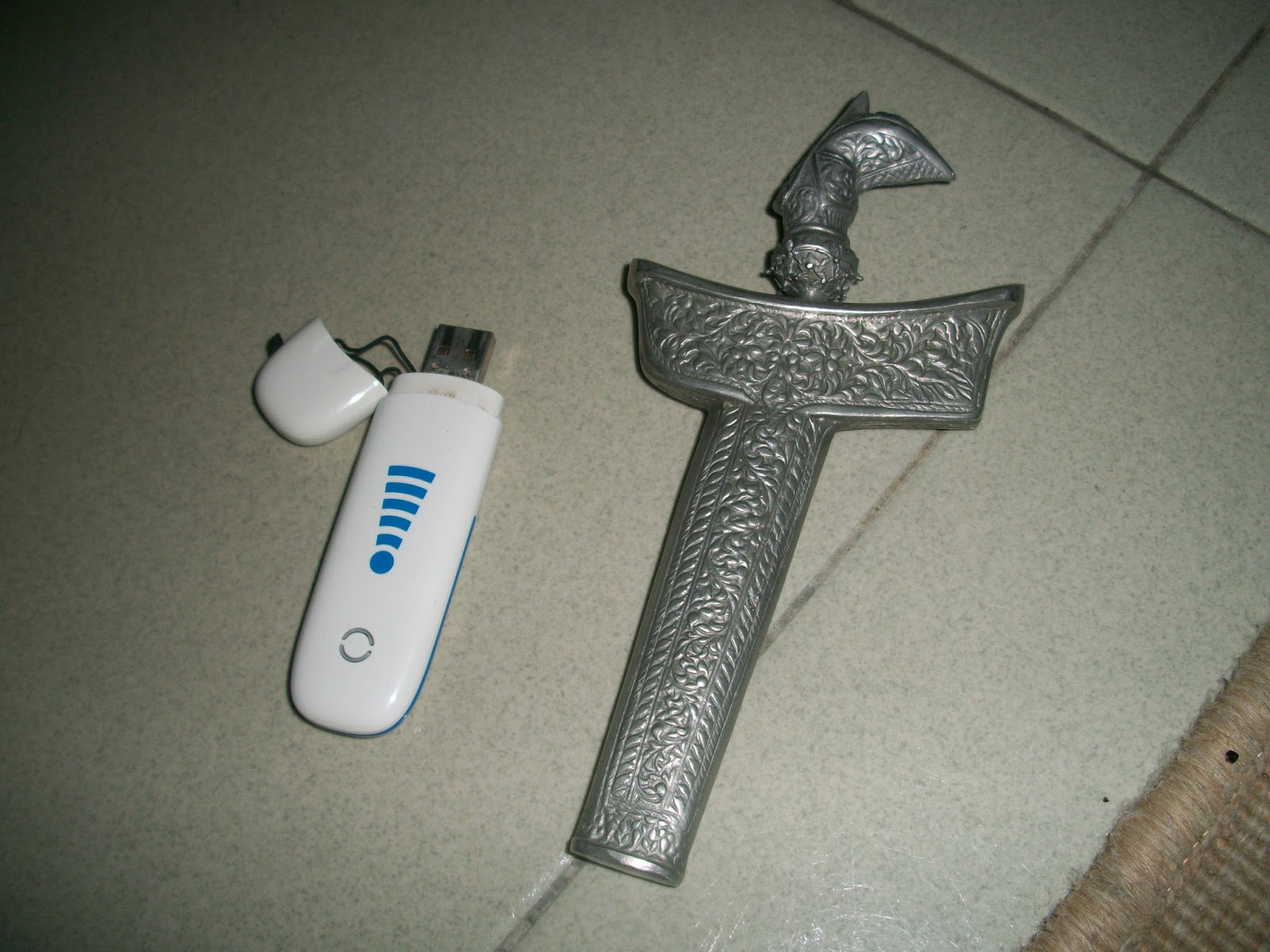
Keris Perak Silver untuk dijual

Seperti Gambar
mempunyai ukiran yang cantik
simpan sebagai koleksi peribadi

Harga RM680


Keris pusaka lama untuk dijual

Seperti gambar
Tiada sarung disebabkan sudah rosak--lama
Keris semenanjung Tanah melayu / Malaya...Bukan keris dari indonesia

Keris jantan

harga RM1600


Friday, October 29, 2010

Solingen Straight Razor Blade - New Old Stock


11th July 2011 Sold to Mr Ade from Temerloh, Pahang, Malaysia

This is a vintage unused Solingen Razor.NOS and Old, but in good condition, it should clean up and sharpen well should you wish to use it...
Written on the razor "F.Herder's" real german hollow ground. Friedr. herder abr. sohne solingen germany.
Price:RM180


Knives of Solingen, Germany

The city of Solingen was founded in 1374. It has long been an active center for the production of high quality cutlery.
Although they may have changed hands many times several of the knife producers that exist in Solingen today have been around for more than one hundred years.
Hermann and Robert Boeker, for example, began production of sabers in 1829 in nearby Remscheid. By 1830 his firm was producing up to 2000 swords per week and employed more than 100 smiths, grinders and laborers.
Later Hermann Boeker would emigrate to the US and founded H. Boeker & Co. in New York. Robert brought the Boeker company to Canada and Mexico in 1865.
In 1869 Heinrich Boeker moved the short distance to Solingen, Germany which was fast becoming a hot bed for industrial tool production. He founded Heinr. Boeker and Co. which produced shaving blades, scissors and pocket knives. As the overseas demand for pocket knives grew, Heinr. Boeker and Co. began to produce more pocket knives and fewer scissors and razors.
As early as the turn of the century the majority of Boeker knives have been exported to the US and distributed by H. Boker & Co. in New York.
J.A Henckels is another company known for their excellence in manufacturing high quality knives and cutlery. They share a similar long term history in the city of Solingen.
In 1731, Johann Peter Henckels, a knife maker based in Solingen, registered the first version of the twin figure symbol we all associate with Henckels knives. In the 260 years since then the symbol has gone through some design changes.
It is now one of the oldest trademarks in existance. Here is a brief outline of the history of the companies pivitol events provided by the Zwilling J.A. Henckels Co.


"1731: Peter Henckels registers the TWIN trademark with Solingens Cutler’s Guild.


1818: Johann Abraham Henckels opens the Company’s first branch office in Berlin.


1851: The Company exhibits its products at the World exhibition in London where it achieves international recognition and is awarded a medal.


1883: A sales office is set up in New York, followed a few years later by Cologne, Vienna, Hamburg, Dresden, Munich and Paris.


1893: World Exhibition in Chicago. The only medal awarded goes to ZWILLING J.A. HENCKELS.


1905: Recognition of another kind: The African explorer Leo Frobenius christens a range of mountains in the then Congo "Zwilling" and another one "Henckels-Berge".


1915: Four first prizes at the World Exhibition in San Francisco.


1938: The company opens a new chapter with the launch of its multi-purpose scissors, setting new standards in design and quality.


1939: Invention of FRIODUR® - a special ice-hardened no-stain steel. This process is patented by J.A. HENCKELS and subsequently all products using this special method are hallmarked accordingly.


1971: A new concept gives fresh stimulus to the market - J.A. HENCKELS knife sets ensure that the right knife is available for every purpose.


1976: International launch of the **** FOUR STAR knife range, meeting the highest quality standards, developed in collaboration with a number of well known German professional chefs.


1981: The Company celebrates its 250th anniversary.


1992: ZWILLING J.A. HENCKELS introduces an entirely new process for the production of cutlery - Sintermetal Component Technology (SCT), developed after many years of research.


1995: Market launch of TWINSTAR, a series of knives setting entirely new standards in cutting performance and featuring Magna Dur® - special-coated blades which remain permanently sharp without re-sharpening.

In addition to its headquarters in Solingen ZWILLING J.A. HENCKELS today has wholly-owned subsidiaries in seven major industrial countries, including the USA and Japan. Products by ZWILLING J.A. HENCKELS are sold in over 100 countries worldwide."
Linder knives have been made in Germany for more than 100 years. They have been making knives since 1870. Solingen City Archives show that Carl Wilhelm Linder started his workshop in a little hamlet named Bech, now part of Solingen, Germany.
His youngest son, Carl, was born in 1869 and carried on his father's tradition of fine knife making. In 1903 Carl Linder moved to a larger location, as they had outgrown their tiny workshop.
In 1918 Linder began to export their knives. In 1937, after Carl Linder's death, the company was sold to Paul Rosenkaimer, a knife maker who had been part of Solingen history for a very long time. He chose to call the company "Carl Liner Nachf."
In German, the word Nachfolger means "successor," and the company is still officially known as Carl Linder Nachf.
In March of 1985 Paul Rosenkaimer died and his son Siegfried Rosenkaimer became the proprietor. If you e-mail or call Linder you can still get a friendly response from Siegfried Rosenkaimer or his son Stephan.
Puma knives are a long time favorite of knife users and collectors from around the world.
Puma-Werk was founded in 1769 in Solingen, Germany. At that time Puma used natural hydraulic water power to drive the large circular wet stones which craftsmen used to shape their knives, razors and tools.
A turning point for Puma was the use of the steam engine which greatly improved production. The first steam engine was invented in 1698 but did not reach wide industrial use until the late 1700s/early 1800s.
After the second World War Oswald Frankeberg joined Puma. He was an experienced hunter and initiated a new policy which would set Puma to producing knives for hunting, fishing and outdoor activities. Puma would no longer make household cutlery. Puma consulted hunting experts world wide to develop knives that would be functional, practical tools for outdoor use.
Two of Puma's most prominant knives are the Universal Jagdtaschenmesser and the famous Great White Hunter developed in 1956.
There are several other knife producers operating from Solingen today including Kissing Cranes, Richartz, Hen and Rooster, Bulldog Brand, German Eye, Hubertus, Herbertz and others. There are also many German knife comapnies that have come and gone.
World Knives goal is to offer a wide selection of the finest and most unique cutlery from around the world in one place. The knives of Germany are an important group for us to represent as they have been such a pivitol part of the development of the modern knife.

Saturday, September 4, 2010

U.Guan Kee & Co. vintage product label - 2 pieces

Price:RM120 for 2 pieces

2008 Traders Hotel, Penang RM3 coupons

Quantity: 5 pieces
Condition: UNC
Price: RM20 for all

1941 axis and allies industrial production certificate

Condition:refer to picture
Price:RM30 for 3 pieces

Sunday, June 27, 2010

Vintage Raleigh Racing bike


Vintage Raleigh Racing bike
I do not know how old is this racing bike. The frame is made from steel-very heavy and use "Shimano" speed gear.
Original green color
Price:RM600

Raleigh brief info

The Raleigh Bicycle Company is a bicycle manufacturer originally based in Nottingham, UK. It is one of the oldest bicycle companies in the world. From 1929 to 1935 Raleigh also produced motorcycles and three-wheel cars, leading to the formation of the Reliant Company.


Raleigh advert from 1940.Raleigh's history started in 1887, in Raleigh Street, Nottingham. Frank Bowden, a prosperous 38-year-old, bought a bicycle made by Messrs. Woodhead, Angois and Ellis, because his doctor had told him to ride a bicycle for his health. Bowden was impressed by his bicycle and went to Raleigh Street to find the makers. Woodhead, Angois and Ellis were making three bikes a week. Bowden made them an offer and bought the business. Production rose and three years later he needed a bigger workshop, which he found in a four-storey building in Russell Street. He changed the company's name to Raleigh Cycles to commemorate the original address.

In six years Bowden created a business which became the biggest bicycle manufacturing company in the world and occupied seven and a half acres in Faraday Road, Lenton, Nottingham.

In 1939 Raleigh opened a bicycle factory at 6 Hanover Quay, Dublin, Ireland and commenced bicycle production there. The Raleigh (Ireland) business expanded and moved to 8-11 Hanover Quay, Dublin in 1943. The plant produced complete bicycles and Sturmey-Archer hubs, and remained in production until 1976, when the factory burned down. Models produced there latterly were the Chopper and Triumph 20. The head badges changed in the late 1960s, possibly after the passing of the Trade Descriptions Act in the UK. Dublin-made machines no longer had "Made in Nottingham" on the Heron or Triumph head badge, the panel being left blank instead.

Saturday, June 26, 2010

Old vintage giant wood hand crusher - Lesung Kayu lama

Old vintage giant wood hand crusher

"Lesung" is a tool to punch or destroy something, such as rice , rice , sugar , chili and more. In terms of definitions , also called the "Crusher" .


This "Lesung" is made of wood. It consists of two different devices the main wood has gap at the center and the  wooden pounder known as :Alu" . "Lesung" is usually used to punch into the rice paddy , rice to make flour , glutinous rice and fruit "belinjau" to make sugar .

Price:RM480

Sunday, June 13, 2010

Bata Lady shoes (New old stock)


Bata New Old Stock (never used) lady shoes

Item: 2 pair of BATA lady shoes new old stock (NOS).
Color: White
Material:PVC (not leather)
Size: 4 and 5
Prize: RM30 for 2 pairs


Bata shoes info

Bata Shoes (Czech: Baťa or Baťovy závody) is a large, family owned shoe company based in Bermuda but currently headquartered in Lausanne, Switzerland, operating 4 business units worldwide – Bata Europe, Bata Emerging Markets, Bata Branded Business and Bata North America. It has a retail presence in over 50 countries and production facilities in 26 countries. In its history the company has sold more than 14 billion pairs of shoes.

Foundation, Tomáš Baťa
The company was founded in 1894 in Zlín (then Austro-Hungarian Empire, today the Czech Republic) by Tomáš Baťa (Czech pronunciation: [ˈtomaːʃ ˈbaca]) whose family had been cobblers for generations. A large order from the army, military shoes and rising demand for them, during World War I started rapid growth and small manufacture turned into modern industrial concern, one of the first mass producers of shoes.

Tomáš Baťa was recognised for his social conscience, establishing housing, cinemas and advancement programmes for his employees. The phrase "work collectively, live individually" is one of his sayings. Baťa recognised the potential of large-scale production, and was often called the "Henry Ford of Eastern Europe". He saw technology as a means of progress, and wanted to make the shoes as cheaply as possible so that the greatest number of people could access them

In 1932 Tomáš died in a plane crash at the Zlín airport (attempting to take-off under bad weather conditions) and his half-brother Jan Antonín Baťa became head of the company.

At the time of Tomáš' death, the Baťa company employed 16,560 people, maintained 1,645 shops and 25 enterprises. Most of what Tomáš had built was centralized in Bohemia-Moravia (15,770 employees, 1,500 shops, 25 enterprises) and Slovakia ( 250 employees and 2 enterprises). The total international contribution to the Baťa organization at the time of Tomas' death consisted of 20 international enterprises, 132 shops, and 790 employees.

Jan Antonín Baťa
Under Jan Antonín Baťa the company grew quickly, continued its expansion throughout Europe, North America, Asia, and North Africa. Zlín accommodated the largest part of the company, with manufacturing and headquarters.

Apart from shoes, Baťa also diversified into other areas (tyres, toys, plastic fibres, etc.).

Thirties and forties
Jan Baťa expanded the Bohemian and Moravian part of the business, more than doubling its size to 38,000 employees, 2,200 shops, and 70 enterprises. In Slovakia, he grew the business from 250 employees to 12,340 and 8 enterprises.

In the face of a worldwide depression, Jan Baťa (through his vision and skill) expanded the company more than sixfold its original size throughout Czechoslovakia and the world. From the time of his brother's death in 1932 to 1942, he grew the Baťa organization to 105,770 employees.

During the 1930s imports from Czechoslovakia ultimately became too expensive due to the economic crisis in Europe at the time. Jan Antonín also established subsidiaries in several foreign countries (for example in Brazil, Britain and Canada).

Bata-villes
Company policy was to set up villages around the factories for the workers and to supply schools and welfare.

These villages include Batadorp in the Netherlands, Baťovany (present-day Partizánske) and Svit in Slovakia, Baťov (nowadays Bahňák, part of Otrokovice) in the Czech Republic, Borovo-Bata (nowadays Borovo Naselje, part of Vukovar in Croatia then in Kingdom of Yugoslavia), Bataville in Lorraine, France, Batawa in Canada, East Tilbury in Essex, England, Batapur in Pakistan and Batanagar and Bataganj in India.


Bata Shoe Store - Grand Hotel KolkataThe company, which established itself in India in 1931, started manufacturing shoes in Batanagar in 1936.

In 1922, the first Bata shop abroad opened in the Netherlands; in 1933, construction began on the Bata shoe factory in Best, in the Dutch province of Brabant, at the intersection of the railway tracks leading to Eindhoven and the Wilhelmina Canal located nearby. There was an abundance of inexpensive and hard-working labourers in the Brabant countryside.

The British "Bata-ville" in East Tilbury inspired the documentary Bata-ville: We Are Not Afraid of the Future.

During World War II
After Germany occupied the rest of pre-war Czechoslovakia (15 March 1939) Jan Antonín Baťa, who left the country with his family after a brief time in jail after the Nazi occupation, tried to save as much as possible, submitting to the plans of Germany as well as supporting financially the Czechoslovak Government-in-Exile led by Edvard Beneš.

An episode: A Baťa-owned Lockheed plane was flown out of Czechoslovakia 2 days before the Nazi occupation. The plane made it to Britain where it was dismantled and shipped to Canada.

Foreign factories were separated from mother company and ownership of plants in Czech lands was transferred to one member of the family.

Jan Antonín Baťa stayed in the Americas from 1939-1940, but as America entered the war, he felt it would be safer for his co-workers and their families back in occupied Czechoslovakia if he left the United States.

At the moment he left the protection of the United States, the British placed him on the "black list". It is believed that the communist influence on the Beneš' exile government was behind this. The official reason for this was Mr. Baťa's inability to pay a demand by the British government amounting to 250,000 pounds sterling (a huge sum of money at the time). The United Kingdom insisted on the huge bail because Mr. Baťa was the owner of the largest industrial concern in occupied Czechoslovakia, located in enemy territory and employing more than 40,000 Czechs and Slovaks.

During the war, Jan Baťa helped hundreds of Jewish families to escape from Czechoslovakia, sending them all over the world throughout the Baťa organization and beyond the Nazis' reach. During the war, among other patriotic deeds, Jan Baťa devised a plan to save more than 100,000 of his countrymen from Nazi concentration camps by setting up plans for a Czech/Slovak infrastructure building plan for a highway and aqueduct system. This frustrated the Nazi decrees that took unemployed Czechs and Slovaks to concentration camps in Germany and elsewhere. The road and aqueduct system envisioned by Mr. Baťa was based on his book entitled Building a nation of 40,000,000 (circa 1938).

During the war Jan Baťa was also the largest contributor to the resistance movement, prior to Munich and throughout the war. Even though he disagreed with the pro-soviet politics of Edvard Beneš and Jan Masaryk, he gave monetary support to them during the war. More than 250 pilots were trained by Jan Baťa's organization in preparation for the allied invasion, many of whom served as pilots or airmen in the RAF.


After the war

[edit] Communist Czechoslovakia
After the war Jan Antonín Baťa attempted (unsuccessfully) to clear his good name against communist accusations against him. Although, in spite of 64 trumped up charges against him, and typical mock trial, and the inability of his attorneys to be allowed to offer a defense. In spite of the organized effort against him, the jury of the time took the brave step of finding Jan innocent of all 64 charges. Communist Military Judge Sramek then invented two new charges against Jan Bat'a and found him guilty, thus expropriating his property in Czechoslovakia.

Two unsuccessful attempts were made by the family of Jan Baťa to clear him of the communist era charges. The first attempt was made during 1968. The second attempt was made in via a lawsuit filed in Prague in 1993. Finally on the third attempt in 2007, Jan Bata was cleared of all charges made against him.

Thomas J. Bata and Marie Bata his mother began to sue Jan A. Baťa over ownership of the international Baťa organization; Thomas Jr. and Marie began a series of lawsuits in Switzerland in 1947, later spreading to the United States and other countries under very peculiar circumstances that lasted for decades. The aim of the lawsuits was to drain Jan as much as possible in order to pressure him into submission.

In 1945 the Czech companies were nationalized under the Beneš decrees, part of a large scale nationalization program in Czechoslovakia.

Politically, Jan Bata was for free markets, free speech, and responsible democracy.

In spite of incredible odds and a far left political climate and machinery in motion to nationalize all large businesses, Jan Baťa fought against the alleged 64 crimes the communists had accused him of. And in fact, the jury at the time, composed mostly of socialists and communists found Jan A. Baťa innocent of all 64 charges. The verdict enraged the communist judge, who immediately added two new charges, declared Jan Baťa guilty, then used the guilty finding as a reason to confiscate all Baťa properties in Czechoslovakia and sentenced Mr. Baťa to 15 years of hard labor in absentia.

After the communist party took all power (1948) it tried to suppress all memory of Tomáš and Jan A. Baťa. Baťas were portrayed as ruthless capitalists, in pursuit of higher profit, yet Baťa employees were typically paid from 3-5 times the wages of their counterparts around the world (see Svatopluk Turek). Furthermore, Bat'a employees were recipients of benefits including life insurance, healthcare, long term care, and generous savings accounts for retirement. Bata even gifted employees' babies generous bank accounts.

The company was renamed as Svit and the town of Zlín as Gottwaldov (after the leader of the communist party). The Svit factory concentrated on the domestic market. During the following decades its ability to compete and its technological infrastructure declined due to under-investment, weak management and stupidity.

Canada

Bata International Centre 1965-2004Anticipating the Second World war, Thomas J. Bata , together with over 100 families from Czechoslovakia, moved to Canada in 1939 to develop the Bata Shoe Company of Canada, including a shoe factory and engineering plant, centered in a town that still bears his name, Batawa, Ontario. Thomas J. Bata successfully established and ran the new Canadian operations and during the war years he sought to maintain the necessary coordination with as many of the overseas Bata operations as was possible. During this period the Canadian engineering plant manufactured strategic components for the Allies war effort and Thomas J. Bata worked together with the Czechoslovak government in exile of President Beneš and with other democratic powers. In 1964 the headquarters of the Bata Shoe Organization was moved to Toronto, Canada and in 1965 it moved into an ultra modern building, the Bata International Centre. The Bata Shoes' former headquarters in North York was designed in the 1960s by architect John Parkin. The building was later sold and was to be replaced by a cultural centre, museum, and park. [4] Other Bata family contributions to Canadian life include: Mrs. Sonja I. Bata founding the Bata Shoe Museum in Toronto in 1998, Mr. and Mrs. Bata being supporters of Trent University, where the Thomas J. Bata Library bears Bata's name,and supporters of York University in Toronto.

After the Second World War the Bata Shoe Organization was led by Thomas J. Bata (Tomáš Baťa Junior), son of Tomáš Baťa and the company grew significantly under Thomas J. Bata's driving leadership. In 2002 the headquarters was moved to Lausanne Switzerland and the Organization has been led by Thomas G. Bata, grandson of Tomáš Baťa.

Present
After the global economic changes in 1990s the company closed a number of its manufacturing factories in developed countries and has focussed its activities on expanding its retail business there. In developing countries it still has a large number of manufacturing units and still produces a significant number of shoes each year.:


Bata Store Wenceslas Square in Prague, the Czech republic - 2005The company is currently headquartered in Lausanne, Switzerland, with 4 business units

Bata Europe, Lausanne
Bata Emerging Markets, Singapore
Bata Branded Business, Best, Netherlands
Bata North America, Toronto
Current shoe brands are:

Bata (Baťa in former Czechoslovakia)
Bata Premium (handcrafted dress shoes)
Bata Industrials (safety footwear)
Bubblegummers (children)
Power (athletic shoes )
Marie Claire (women)
According to Bata, in 2007 the company served 1 million customers per day, employed over 40,000 people, operated 4,600 retail stores, managed a retail presence in over 50 countries and had 40 production facilities across 26 countries.

Czechoslovakia after 1989
After the "Velvet Revolution" in November 1989, Thomas J. Baťa arrived as soon as December 1989. He was warmly welcomed by the population.

The Czechoslovak government offered him the opportunity to invest in the ailing Svit. Since companies "nationalised" before 1948 were not returned to their original owners, the state continued to own Svit and "privatized" it during voucher privatization. Its ability to compete in the free market led to its decline and in 2000 Svit went bankrupt.

Thursday, June 10, 2010

Vintage "Gobek Sireh / Pinang"


Vintage "Gobek Sireh"

I do not know whether this "gobek" made from brass or steels (because the color of this "gobek" is more to white color). It is very nice and special since most of the "Gobek" color is "Yellow" (color of the brass).


Price:RM180

Vintage / Old Kodak camera


Kodak vintage camera

This vintage / antique kodak camera is made in Rochester,New York of USA. I do not know whether this camera is working or not.The flash bulp also not available, Very nice for vintage display items.

Price: RM130

Kodak brief info

Eastman Kodak Company (NYSE: EK) is a multinational US corporation which produces imaging and photographic materials and equipment. Long known for its wide range of photographic film products, Kodak is re-focusing on two major markets: digital photography and digital printing.

Origins
Kodak's origins rest with Eastman Dry Plate Company, and the General Aristo Company, founded by inventor George Eastman and businessman Colin Craft in Rochester and Jamestown, New York. The General Aristo Company was formed in 1899 in Jamestown New York, with George Eastman as treasurer, and this company purchased the stock of American Aristotype Company. Eventually, the business in Jamestown was moved in its entirety to Rochester, and the plants in Jamestown were razed. The Eastman Dry Plate Company was responsible for the first cameras suitable for nonexpert use. The Kodak company attained its name from the first simple roll film cameras produced by Eastman Dry Plate Company, known as the "Kodak" in its product line. The cameras proved such an enormous success that the word Kodak was incorporated into the company name. George Eastman registered the trademark Kodak on September 4, 1888. The Eastman Kodak Company was founded in 1892.The company is incorporated in New Jersey but has its offices in Rochester, New York.George Eastman, Kodak's founder, coined the advertising slogan, "You press the button, we do the rest."In 1901 the Eastman Kodak Company acquired the stock of General Aristo Company.

Kodak name

The logo from 1987 to 2006.The letter "K" had been a favorite of Eastman's, he is quoted as saying, "it seems a strong, incisive sort of letter". He and his mother devised the name Kodak with an anagram set. He said that there were three principal concepts he used in creating the name: it should be short, one cannot mispronounce it, and it could not resemble anything or be associated with anything but Kodak. It has also been suggested that "Kodak" originated from the suggestion of David Houston, a fellow photographic inventor who held the patents to several roll film camera concepts that he later sold to Eastman. Houston, who started receiving patents in 1881, was said to have chosen "Nodak" as a nickname of his home state, North Dakota (NoDak).This is contested by other historians, however, who cite that Kodak was trademarked prior to Eastman buying Houston's patents.

Sunday, June 6, 2010

Antique / Vintage Teak Wood Mirror


Mirror Mirror on the wall....

This is very antique / vintage teak wood mirror. I do not know the exact age of this mirror.This mirror is originate from Indonesia and all the design is carefully and beautifully handcarved.This is definitely collectors (one of a kind) item and suitable for office or home display / decorative items.

Approximate dimension: 1500mm * 900mm
I do not measure the actual weight.
Price:RM3800

Mirror info

A mirror is an object with at least one reflective surface. The most familiar type of mirror is the plane mirror, which has a flat surface. Curved mirrors are also used, to produce magnified or diminished images or focus light or simply distort the reflected image.

Mirrors are commonly used for personal grooming or admiring ones self (in which case the old-fashioned term "looking-glass" can be used), decoration, and architecture. Mirrors are also used in scientific apparatus such as telescopes and lasers, cameras, and industrial machinery. Most mirrors are designed for visible light; however, mirrors designed for other types of waves or other wavelengths of electromagnetic radiation are also used, especially in non-optical instruments.

History of mirror

Seated woman holding a mirror. Ancient Greek Attic red-figure lekythos, ca. 470-460 BC, National Archaeological Museum, Athens.
A sculpture of a lady looking into a mirror, IndiaThe first mirrors used by people were most likely pools of dark, still water, or water collected in a primitive vessel of some sort. The earliest manufactured mirrors were pieces of polished stone such as obsidian, a naturally occurring volcanic glass. Examples of obsidian mirrors found in Anatolia (modern-day Turkey) have been dated to around 6000 BC. Polished stone mirrors from central and south America date from around 2000 BC onwards.Mirrors of polished copper were crafted in Mesopotamia from 4000 BC,and in ancient Egypt from around 3000 BC.In China, bronze mirrors were manufactured from around 2000 BC,some of the earliest bronze and copper examples being produced by the Qijia culture. Mirrors made of other metal mixtures (alloys) such as copper and tin speculum metal may have also been produced in China and India.Mirrors of speculum metal or any precious metal were hard to produce and were only owned by the wealthy.

Metal-coated glass mirrors are said to have been invented in Sidon (modern-day Lebanon) in the first century AD,and glass mirrors backed with gold leaf are mentioned by the Roman author Pliny in his Natural History, written in about 77 AD.The Romans also developed a technique for creating crude mirrors by coating blown glass with molten lead.

Parabolic mirrors were described and studied in classical antiquity by the mathematician Diocles in his work On Burning Mirrors.Ptolemy conducted a number of experiments with curved polished iron mirrors,and discussed plane, convex spherical, and concave spherical mirrors in his Optics.Parabolic mirrors were also described by the physicist Ibn Sahl in the 10th century,and Ibn al-Haytham discussed concave and convex mirrors in both cylindrical and spherical geometries,carried out a number of experiments with mirrors, and solved the problem of finding the point on a convex mirror at which a ray coming from one point is reflected to another point. By the 11th century, clear glass mirrors were being produced in Moorish Spain.

Some time during the early Renaissance, European manufacturers perfected a superior method of coating glass with a tin-mercury amalgam. The exact date and location of the discovery is unknown, but in the 16th century, Venice, a city famed for its glass-making expertise, became a centre of mirror production using this new technique. Glass mirrors from this period were extremely expensive luxuries.The Saint-Gobain factory, founded by royal initiative in France, was an important manufacturer, and Bohemian and German glass, often rather cheaper, was also important.

The invention of the silvered-glass mirror is credited to German chemist Justus von Liebig in 1835.His process involved the deposition of a thin layer of metallic silver onto glass through the chemical reduction of silver nitrate. This silvering process was adapted for mass manufacturing and led to the greater availability of affordable mirrors. Nowadays, mirrors are often produced by the vacuum deposition of aluminium (or sometimes silver) directly onto the glass substrate.

Raleigh Chopper clone bicycle ???


I think this chopper is not belong to Raleigh chopper,since it using the Shimano GT3shifter instead of a 3-speed Sturmey Archer gear hub that synonym with Raleigh Chopper bicycle.
Anybody have info about this bike please help me since I cannot identify the maker of this chopper since no trademark exist at the bicycle (only chassis number available).


Chopper bicycle info


A chopper bicycle is a bicycle that is designed to get attention and provide a smooth comfortable ride. While the term "chopper" is generally used to describe a motorcycle or bicycle that has had some of its original parts replaced with custom parts, today's definition has grown to include custom motorcycles and bicycles that are low to the ground, usually with extended forks creating a long front end.

There are various cycling groups and clubs around the world that feature chopper bicycle riders such as the Freakbike Militia. Such groups encourage all chopper bicycle riders to join them on rides celebrating different events and holidays.

Because the frame of a chopper bicycle and a chopper motorcycle can be strikingly similar, and of a high enough quality/durability, it is relatively common to have an empty space, or 'engine bay', in the frame, in which a motor can be inserted into the frame at a later date, among other tweaks and conversions. Depending on the quality of strength of the frame, and the engines size and output, this can result in blurring between the classifications of bicycle, moped, and/ or motorcycle. Legal laws and statutes may vary in your local state or territory.

The history of the bicycle….!

Today the bike represents one of the most important means of transportation with approximately 1.5 billion bicycles in circulation. European countries themselves represent 50% of the totally kilometres cycled world wide each year.

The bicycle was first introduced in Germany by Baron Karl von Drais called laufmaschine or “running machine” in 1817 and then patented in Paris 1818. At the time, riders sat astride a wooden frame supported by a fork and pushed the vehicle along with his/her feet while steering the front wheel.

In 1861, inventors took bicycle design in a new direction by adding a mechanical crank drive with pedals and producing the velocipede. By 1869 the bikes featured, tubular steel frame and wire spoke wheels with solid rubber tires.

After the war of 1870, the bikes had a very large front wheel with a small one at the rear. These bicycles were difficult to ride due their very high seat and poor weight distribution. It was only in 1884 that wheel diameters were reduced and setting the seat further back weight distribution and comfort. To solve the problem of obtain sufficient speed chain drive was introduced, thereby connecting the frame-mounted pedals to the rear wheel. These models were known as the safety bicycles. By the end of 1890 the bike refinements resemble today’s bikes with the exception of speed shifters.

This innovative transportation method became so popular in Europe that the first tour de France took place in 1903. Soon after the invention of speed shifters, cyclists started using them for competitive cycling.

By the turn of the century, cycling clubs flourished on both sides of the Atlantic, and touring and racing became widely popular. The bike popularity is still growing today because of new innovations that renders cycling enjoyable as well as useful.