Friday, June 18, 2010

Vintage Rado Conway


Vintage Rado mint condition
-Automatic movement
-Stainless Steel case

-Stainless Steel scew back case

-Original dial in excelent condition

-Original hands in excelent condition

-Working great

-Stainless steel bands not original

Price:RM320

Rado brief info

Rado is a Swiss manufacturer of watches, with headquarters in Lengnau, Switzerland. It is noted for its use of scratch-proof materials, a field in which it is considered a pioneer. Today the company produces about half a million watches a year with a staff of about 300 in total.
History
Formed in 1917 as Schlup & Co., Rado initially produced watch movements only. In 1957 the company launched its first collection of watches under the Rado brand. In 1962 the Rado Diastar, the world's first scratch-proof watch, was launched. It has been in production ever since, now sold as DiaStar The Original.
In 1983 Rado became part of the SMH group which was renamed in 1998 as the Swatch Group.

Design
RADO differs from the traditional Swiss watch makers in that it leans towards innovative uses of high tech materials in distinct design. RADO has focused on pioneering the use of a number of materials that are unique within the watch making industry, such as e.g. hardmetal(tungsten- and titanium-carbide), ceramics, lanthanum and sapphire crystal.
In 2004 the RADO vision was realized with the introduction of the V10K. Coating the watch with high tech diamonds made the V10K the hardest watch on Earth, realized by the Guinness Book of World Records.
The newer RADO watches are also distinct from the traditional Swiss watch industry in that their aesthetic is unique. Market reaction tends to be mixed to such a strong aesthetic, with many who appreciate the unique and distinct RADO look and those who do not.
During their time, RADO has received more than 20 elite international design awards, from the RED DOT Award to the iF Design Award, for both their product and most recently, their collaboration with Jasper Morrison for an innovative watch box that mimics the shape of the human wrist.

Pricing
RADO watches vary in pricing according to model, age and materials but the core collection of RADO pieces will range from about US$700 to about US$28,000. Models that include pave dials of diamonds and baguette diamonds can cost approximately US $30,000 to $250,000.

Omega De Ville Quartz 1365


Omega Deville quatrz dress watch,in very good condition,and working order.
Plated with 20 micron gold plated .
There is a sign of wear and tear due to aging but the gold plating looks as new.
The movement is swiss quartz and is in good working order.
Note this watch does not have a crown to change the time,to change the time you push the button on the side where the crown would be,push the button in and hold for 3 seconds the hour hand will move rapidly around untill you release the button, it will then continue to move around exactly one hour then stop,if you push the button in for one second the minute hand will move two minutes evry time you push the button for one second,sounds complicated but it is really quite simple,the watch is fitted with a new leather strap(non omega)
Price:RM380


Omega brief info

History

Foundation
Omega medical chronograph with outer pulsations track, ca. 1950
Omega Seamaster De Ville, an early "waterproof" watch, with automatic movement and date, in 14k goldThe forerunner of Omega was founded at La Chaux-de-Fonds, Switzerland in 1848 by 23-year-old Louis Brandt, who assembled key-wound precision pocket watches from parts supplied by local craftsmen. He sold his watches from Italy to Scandinavia by way of England, his chief market. After Louis Brandt's death in 1879, his two sons Louis-Paul and César, troubled by irregular deliveries of questionable quality, abandoned the unsatisfactory assembly workshop system in favour of in-house manufacturing and total production control.

Relocation
Due to the greater supply of manpower, communications and energy in Biel/Bienne, the enterprise moved into a small factory in January 1880, then bought the entire building in December. Two years later the company moved into a converted spinning-factory in the Gurzelen area of Biel/Bienne, where its headquarters are still situated today.
Their first series-produced calibres, Labrador and Gurzelen, as well as the famous Omega calibre of 1894, would ensure the brand's marketing success.

Merger
Louis-Paul and César Brandt both died in 1903, leaving one of Switzerland's largest watch companies — with 240,000 watches produced annually and employing 800 people — in the hands of four young people, the oldest of whom, Paul-Emile Brandt, was not yet 24.
Brandt was the great architect and builder of Omega.His influence would be felt over the next half-century. The economic difficulties brought on by the First World War would lead him to work actively from 1925 toward the union of Omega and Tissot, then to their merger in 1930 into the group SSIH, Geneva.
Under Brandt's leadership and Joseph Reiser's from 1955, the SSIH Group continued to grow and multiply, absorbing or creating some fifty companies, including Lemania, manufacturers of the most famous Omega chronograph movements. By the seventies, SSIH had become Switzerland's number one producer of finished watches and number three in the world.

Financial takeover
Weakened by the severe monetary crisis and recession of 1975 to 1980, SSIH was bailed out by the banks in 1981. During this period, Seiko expressed interest in acquiring Omega, but nothing came out of the talks.
Switzerland's other watch making giant Allgemeine Schweizerische Uhrenindustrie AG (ASUAG - supplier of a large range of Swiss movements and watch assemblers) was in economic difficulty. It was the principal manufacturer of Ébauche (unfinished movements) and owner, through their sub-holding company GWC (General Watch Co), of various other Swiss watch brands including Longines, Rado, Certina and Mido.
After drastic financial restructuring, the R&D departments of ASUAG and SSIH merged production operations at the ETA complex in Granges. The two companies completely merged forming ASUAG-SSIH, a holding company, in 1983.
Two years later this holding company was taken over by a group of private investors led by Nicolas Hayek. Renamed SMH, Société de Microélectronique et d'Horlogerie, this new group over the next decade proceded to become one of the top watch producers in the world.In 1998 it became the Swatch Group, which now manufactures Omega and other brands such as Blancpain, Swatch, and Breguet.

georgivs vi dei gra britt omn rex fid def


georgivs vi dei gra britt omn rex fid def ind imp


I do not know whether this is a coin or a medal? Please give some comments...
On the king face side written as " georgivs vi dei gra britt omn rex fid ". What is the meaning of that ?

Maybe it is a Latin words that describe as "George VI, By the Grace of God, King of all the British Territories, Defender of the Faith".
Price:RM180

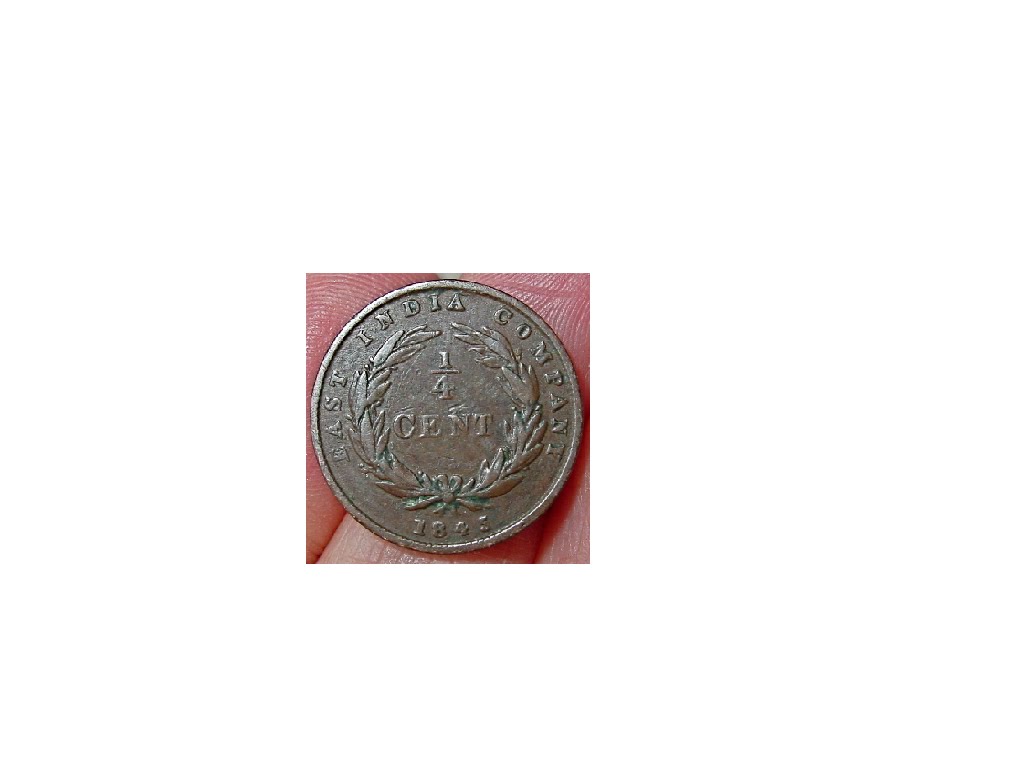
East India Company 1/4 Cent 1845


East India Company 1/4 Cent 1845


Price:RM180


East India Co info


The East India Company was perhaps the most powerful commercial organisation that the world has ever seen. In its heyday it not only had a monopoly on British trade with India and the Far East, but it was also responsible for the government of much of the vast Indian sub-continent. Both of these factors mean that the East India Company (or, to call it by its proper name, the British East India Company) was crucial to the history of the tea trade.
Before 1600, Portugal controlled most European trade with India and the Far East (an area known then as the Indies). But in 1600 Queen Elizabeth I gave a royal charter to a new trading company, the East India Company, by which it was given a monopoly over all British trade with the Indies. The Company soon began competing with the Portuguese, as did later East India Companies, set up in the Netherlands, Denmark and France (though for ease, the term East India Company shall here be used to describe the British East India Company). The East India Company's first major base was in western India, where it found a rich source of exotic textiles and other produce, which could be exported back to Britain or taken further east to exchange for spices.

1828 East India Compay Coat-Of-Arms Type -half pice (Pulau Pinang)


1828 East India Compay Coat-Of-Arms Type -half pice (Pulau Pinang)
Description:
Pulau Pinang (PENANG) Coat of Arm series East India Company-Bengal(two flag) half Cent (Half Pice) copper.
Tailside Coat of arm East India Company-Bengal: Writing in arabic for Pulau Pinang.
Price:RM350